Rent or Buy? JCB, Concrete Mixers and Excavators for Small Contractors
For small contractors, construction equipment is one of the biggest financial decisions in a project. Machines such as JCB backhoe loaders, concrete mixers, and excavators can help complete work faster, reduce manual effort, and improve site productivity. However, purchasing these machines requires a significant investment. Renting equipment can reduce the initial financial burden, while buying may provide better long-term value for contractors who have regular work and consistent machine requirements.
Understanding the Rent-or-Buy Decision
Renting and buying are two different ways of accessing construction equipment.
Renting means paying a supplier or equipment owner to use a machine for an agreed period. The arrangement may be based on hourly, daily, weekly, or monthly rates.
Buying means purchasing the equipment and taking responsibility for its operation, maintenance, insurance, storage, and resale.
Neither option is automatically more economical. A contractor who needs an excavator for only a few days may benefit from renting. A contractor who uses the same machine almost every working day may find ownership more practical.
Main Factors to Consider
Project frequency: How often will the machine be required?
Utilization: How many productive hours will it operate?
Cash flow: Can the business manage the purchase price or loan payments?
Maintenance: Who will handle repairs and servicing?
Availability: Can suitable equipment be rented when required?
Transport: How much will moving the machine between sites cost?
Ownership period: How long is the contractor planning to use it?
Resale value: Can the machine be sold later at a reasonable price?
The most useful comparison is the total cost of using a machine over a specific period, rather than looking only at its purchase price or daily rental rate.
2. Renting or Buying a JCB Backhoe Loader
A JCB backhoe loader is a versatile construction machine with a front loader bucket and a rear excavating arm. Contractors use it for digging, loading, trenching, material handling, and selected site preparation activities.
It is commonly used in road construction, building projects, drainage work, agricultural land development, and utility installation.
When Renting a JCB Makes Sense
Renting may be suitable when a contractor has occasional excavation or loading requirements.
For example, a small contractor working on a residential building may need a backhoe loader for foundation excavation and soil removal for only a limited period.
Rental can be useful when:
The project is short-term.
Machine requirements change between projects.
The contractor has limited initial capital.
Equipment maintenance support is not available internally.
The contractor wants to avoid long-term ownership expenses.
Depending on the rental agreement, the supplier may provide an operator, fuel, transportation, or basic maintenance support. These inclusions should always be confirmed before booking.
When Buying a JCB Makes Sense
Buying may be practical when the contractor has regular excavation, loading, and material-handling work.
A backhoe loader can be used across multiple projects, reducing the need to arrange a new rental every time work begins.
Ownership may offer benefits such as:
Greater control over machine availability.
Flexibility to move between projects.
Potential income from renting the machine to other contractors.
Better control over operating schedules.
Long-term asset value.
However, the owner must account for servicing, tyres, hydraulic components, fuel, insurance, operator wages, and unexpected repairs.
3. Renting or Buying Concrete Mixers
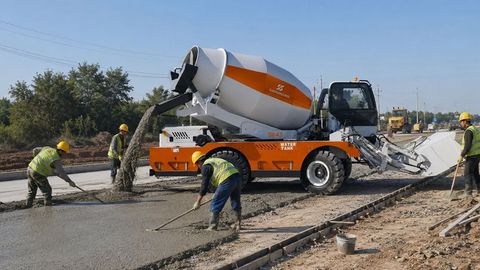
Concrete mixers are used to combine cement, sand, aggregates, and water into a consistent concrete mixture.
They are available in different capacities and configurations, from small portable mixers to larger site mixers and truck-mounted transit mixers.
For small contractors, the choice often depends on the amount of concrete required and the number of projects handled at the same time.
When Renting a Concrete Mixer Makes Sense
Renting may be suitable for contractors who complete occasional construction or repair work.
It can be useful for:
Small residential projects.
Short-duration concrete work.
Boundary walls.
Repair and renovation projects.
Occasional flooring and foundation work.
Renting avoids the need to purchase and store equipment that may remain unused between projects.
When Buying a Concrete Mixer Makes Sense
Buying may be more economical when concrete mixing is a regular part of daily operations.
A contractor who handles multiple building projects may benefit from having a mixer available whenever required.
Ownership can reduce repeated rental arrangements and provide greater control over work schedules.
Before purchasing, contractors should compare mixer capacity, motor power, fuel or electricity requirements, drum design, portability, and spare-part availability.
Important Concrete Mixer Considerations
The mixer must match the project's concrete requirements.
A small drum mixer may be sufficient for limited site work, but larger projects may require higher-capacity equipment or ready-mixed concrete supplied by a batching plant.
Contractors should also consider the difference between drum capacity and actual usable mixing output. The stated drum capacity does not always represent the volume of concrete produced in one batch.
4. Renting or Buying Excavators
Excavators are designed for digging, trenching, earthmoving, demolition support, and material handling.
They are available in several sizes, including mini excavators, compact excavators, and large crawler excavators.
Small contractors often consider mini excavators or compact machines because they can work in restricted spaces and are easier to transport than larger equipment.
When Renting an Excavator Makes Sense
Renting is useful when excavation work is occasional or when different projects require different machine sizes.
For example, a contractor may need a mini excavator for residential drainage work but a larger crawler excavator for a major earthmoving project.
Rental can provide access to different machine types without requiring multiple purchases.
It may be suitable when:
Excavation is not a regular activity.
Project requirements vary.
The contractor is testing a new service.
The machine is needed for a short period.
Purchase financing is difficult.
When Buying an Excavator Makes Sense
Buying may be a better option when excavation is a regular source of business revenue.
An owned excavator can be scheduled across different sites and may generate additional income when rented to other operators.
However, excavators can involve substantial ownership costs.
Important expenses include:
Hydraulic system maintenance.
Track or tyre replacement.
Engine servicing.
Bucket and attachment wear.
Undercarriage repairs.
Fuel consumption.
Operator wages.
Transportation and insurance.
Contractors should also consider whether their business has enough work to keep the machine productive throughout the year.
5. Indicative Equipment Rental Rates in India
Rental prices vary by location, machine model, operating condition, rental duration, and whether the operator and fuel are included.
The following figures are broad market references reported for July 2026. They are not confirmed quotations for Panipat or any other specific location.
Equipment | Indicative rental rate | Typical arrangement |
|---|---|---|
JCB-class backhoe loader | ₹550–₹900/hour | Dry hire |
JCB-class backhoe loader | ₹5,000–₹9,000/day | Dry hire, approximately 8 hours |
Mini excavator (2–3 tonne) | ₹500–₹900/hour | Usually hourly with minimum billing |
20-tonne excavator | ₹1,400–₹2,200/hour | Wet hire |
Self-loading concrete mixer | ₹1,200–₹2,000/hour | Depends on capacity and inclusions |
These rates should not be compared without checking what is included.
Dry hire generally means the machine is supplied without an operator or fuel. Wet hire generally includes an operator and may include diesel, depending on the agreement.
Transport, minimum working hours, overtime, taxes, and standby charges can increase the final bill.
6. What Does It Cost to Buy Construction Equipment?
The purchase price depends on machine size, brand, model, specifications, condition, and dealer terms.
For a small contractor in India, the following broad price references can help with initial planning.
Equipment category | Indicative purchase price |
|---|---|
JCB 3DX-class backhoe loader | ₹30–₹32 lakh |
JCB mini excavators | ₹26–₹31 lakh |
JCB small excavators (8–15 tonne) | ₹33–₹47 lakh |
JCB medium excavators (15–25 tonne) | ₹52–₹83 lakh |
Concrete mixer | Varies considerably by type and capacity |
The JCB and excavator figures are indicative October 2026 price ranges, not dealer quotations. Concrete mixer prices are particularly dependent on whether the machine is a small portable drum mixer, a site mixer, or a self-loading concrete mixer.
A buyer should request a written quotation that separates the machine price from GST, transportation, insurance, registration where applicable, attachments, and other charges.
Additional Costs of Ownership
The purchase price is only the beginning. Contractors should budget for:
Loan interest and monthly EMI.
Insurance and applicable taxes.
Routine servicing and lubricants.
Fuel and operator wages.
Tyres, tracks, buckets, and other wear parts.
Hydraulic and engine repairs.
Transportation between sites.
Parking and secure storage.
Unexpected breakdowns.
A machine that is affordable to purchase may still become expensive to operate if it spends many days idle or requires frequent repairs.
7. A Simple Example: Renting vs Buying a JCB
Consider a contractor who needs a JCB-class backhoe loader for different projects.
Assume the following illustrative figures:
Purchase price: ₹30 lakh.
Dry rental rate: ₹7,000 per day.
Working requirement: 10 days per month.
If the contractor rents:
₹7,000 × 10 days = ₹70,000 per month.
Over 12 months, the rental expense would be ₹8.4 lakh, excluding any additional transport, fuel, operator, or other charges not included in the rental agreement.
If the contractor buys:
The contractor pays the purchase price or arranges finance. In addition, there are monthly costs for insurance, servicing, fuel, operator wages, repairs, and transportation.
The machine also has a resale value, which should be considered when calculating its long-term ownership cost.
This example does not prove that renting is always cheaper. It shows why the number of working days matters. A machine used for only 10 days per month may not generate enough savings to justify the financial commitment of ownership.
8. How to Calculate the Break-Even Point
A break-even calculation helps identify when buying becomes more economical than renting.
A simplified method is:
Monthly rental cost = Rental rate × Expected working days
Monthly ownership cost = Finance or depreciation cost + Insurance + Maintenance + Other fixed expenses + Operating costs
For a fair comparison, include only costs that differ between the two arrangements. For example, if the contractor pays for fuel and the operator under both rental and ownership, those costs should be included consistently.
Example
Suppose a contractor receives these estimates for a backhoe loader:
Item | Illustrative amount |
|---|---|
Dry rental rate | ₹7,000/day |
Expected usage | 12 days/month |
Monthly rental expense | ₹84,000 |
Estimated monthly ownership cost | ₹65,000 |
In this simplified example, ownership appears to cost ₹19,000 less per month.
However, the ownership estimate must include realistic financing, maintenance, insurance, and depreciation assumptions. It should also account for the risk of breakdowns and periods without work.
The calculation changes if the machine is used for only five or six days per month.
A contractor should calculate the break-even point using actual local quotations rather than relying on a general market average.
9. Factors That Can Make Buying More Expensive Than Expected
Equipment ownership can create financial pressure when the contractor does not plan for all associated expenses.
Idle Equipment
A machine that remains parked still creates financial obligations. Loan repayments, insurance, storage, and depreciation continue even when it is not working.
Unexpected Repairs
Hydraulic pumps, engines, transmission systems, tyres, and undercarriage components can require expensive repairs.
Older machines may need more frequent attention, especially when their maintenance history is unclear.
Operator Availability
A machine requires a skilled operator. If a contractor cannot find a suitable operator, the equipment may remain unused.
Transportation
Moving an excavator between sites may require a suitable trailer and additional arrangements. Transport costs can become significant when projects are far apart.
Resale Value
Construction equipment loses value with age, operating hours, and wear. Its resale price also depends on demand, condition, service records, and market conditions.
A purchase decision should therefore consider the likely resale value rather than assuming that the machine can be sold later for a fixed amount.
10. How Small Contractors Can Reduce Equipment Costs
A contractor does not always need to own every machine required for a project. A combination of ownership and rental can be more practical.
Own the Most Frequently Used Machine
If a backhoe loader is required on most projects, owning one may make sense. Less frequently used excavators or specialized mixers can be rented when needed.
Rent for Large or Specialized Projects
A contractor may occasionally need a larger excavator than usual. Renting allows access to the required capacity without purchasing a machine that may remain idle afterward.
Share Equipment With Other Contractors
Two or more contractors may coordinate equipment use where schedules and project locations allow.
Any shared arrangement should clearly establish responsibility for operating costs, maintenance, damage, transportation, and scheduling.
Negotiate Longer Rental Periods
For projects lasting several weeks, ask suppliers for weekly or monthly rates. These may be more economical than repeated daily bookings.
Compare Used and New Machines
A well-maintained used machine may have a lower purchase price than a new one.
However, buyers should check engine condition, hydraulic performance, operating hours, service records, structural wear, and availability of replacement parts before purchasing.
Track Machine Utilization
Maintain a record of:
Working days per month.
Actual operating hours.
Fuel consumption.
Maintenance expenses.
Downtime.
Revenue generated by the machine.
These records help determine whether ownership is financially justified.
11. What to Check Before Renting Equipment
Before signing a rental agreement, contractors should confirm the complete cost and operating conditions.
Machine condition: Inspect the machine for leaks, visible damage, tyre or track wear, and unusual noises.
Capacity: Check whether the bucket size, digging depth, lifting capacity, and machine dimensions match the project.
Operator: Confirm whether an operator is included and whether they have suitable experience.
Fuel: Establish who will pay for diesel and how fuel consumption will be recorded.
Working hours: Confirm the daily shift length, minimum billing, overtime rate, and standby charges.
Transportation: Clarify who will arrange transportation and whether loading and unloading are included.
Maintenance: Decide who is responsible if the machine develops a fault during the rental period.
Documentation: Record the machine's condition, operating hours, rental duration, payment terms, and responsibilities in writing.
These checks can help prevent disagreements and unexpected expenses.
12. Financing Options for Buying Equipment
Small contractors may consider financing when purchasing machinery.
Banks and non-banking financial companies (NBFCs) offer equipment finance products, subject to eligibility and lender terms.
Common financing arrangements include:
Equipment loans.
Commercial vehicle or machinery finance.
Loans against business assets.
Dealer-arranged finance.
Used equipment finance.
Before taking a loan, compare the interest rate, down payment, repayment period, processing charges, insurance requirements, and foreclosure conditions.
A lower EMI does not necessarily mean a cheaper loan. A longer repayment period may increase the total interest paid.
Contractors should also keep enough working capital for fuel, wages, repairs, and project expenses instead of using all available funds for the down payment.
13. Which Equipment Should a Small Contractor Buy First?
The best first purchase depends on the contractor's main type of work.
Contractor's main work | Equipment to consider |
|---|---|
Residential construction and site preparation | Backhoe loader |
Foundation and trench excavation | Mini excavator or suitable excavator |
Regular small concrete jobs | Portable concrete mixer |
Larger concrete production requirements | Higher-capacity mixer or ready-mix supply arrangement |
Road and drainage projects | Backhoe loader, excavator, and rented specialized equipment |
Mixed small projects | Own frequently used equipment and rent the rest |
A backhoe loader can be a versatile first machine for contractors handling different types of site work. However, it is not the right choice for every business.
A contractor who mainly handles concrete work may benefit more from owning a suitable mixer and renting excavation equipment.
The decision should follow the contractor's actual project pipeline rather than the popularity of a particular machine.
14. Frequently Asked Questions
Is it better to rent or buy a JCB in India?
Renting is generally more suitable for occasional or short-term work. Buying may be more economical when the machine is used regularly across multiple projects. The decision depends on utilization, financing costs, maintenance, and local rental rates.
How much does it cost to rent a JCB per day?
An indicative July 2026 market reference for a JCB-class backhoe loader is around ₹5,000–₹9,000 per day for dry hire. The final rate depends on location, machine condition, rental duration, operator arrangements, fuel, and transportation.
Is buying a mini excavator worthwhile for a small contractor?
It can be worthwhile when the contractor regularly handles trenching, drainage, landscaping, or foundation work. If excavation jobs are occasional, renting may reduce financial risk.
Should a contractor buy or rent a concrete mixer?
A contractor who mixes concrete frequently may benefit from ownership. For occasional work, renting can avoid storage, maintenance, and equipment investment. The required mixer capacity and type should also be considered.
Can a small contractor earn money by renting out an owned JCB?
Yes. An owner may rent out the machine when it is not required for their own projects. However, income depends on local demand, machine condition, operator availability, rental agreements, and the number of paid working days.
What is dry hire and wet hire?
Dry hire generally means renting the machine without an operator or fuel. Wet hire generally includes an operator and may include fuel. The exact inclusions should be confirmed in the agreement.
Is a used JCB a good investment?
A used machine can reduce the initial investment, but it should be inspected carefully. Maintenance history, operating hours, hydraulic condition, engine performance, and expected repair costs are important.
How many days per month should a machine work to justify buying?
There is no universal number. Some equipment may become economical at a lower utilization level, while other machines need much more regular work. Compare the full monthly ownership cost with the rental cost for the same working hours.
Conclusion
For small contractors, renting or buying construction equipment is a business decision that directly affects cash flow, project costs, and profitability.
Renting JCB backhoe loaders, concrete mixers, and excavators can be a practical choice for occasional projects, uncertain workloads, and businesses with limited capital. Buying can offer greater availability and long-term value when the equipment is used regularly.
The most practical approach is often a combination of both. Contractors can own the machines they use frequently and rent specialized or less frequently required equipment.

Related Post...
Rent or Buy? JCB, Concrete Mixers and Excavators for Small Contractors
Updated: November 27, 2026
Read More