Can a Solar + Battery Setup Keep Your Home Running During Power Cuts?
A solar power system combined with battery storage can help solve this problem. It allows a home to generate electricity from sunlight, store unused energy, and use that stored power when the regular electricity supply is unavailable. However, not every rooftop solar installation can provide backup during a power cut. A standard grid-connected solar system usually switches off when the electricity grid fails. To keep appliances running, homeowners generally need a suitable hybrid inverter, battery storage, and a properly designed backup circuit.
How Does a Solar + Battery System Work?
A solar and battery setup combines three main components: solar panels, an inverter, and a battery.
Each component has a different role in generating, converting, storing, and supplying electricity.
1. Solar Panels Generate Electricity
Solar panels are usually installed on the rooftop or another location with good sunlight exposure.
They contain photovoltaic cells that convert sunlight into direct current (DC) electricity.
The amount of electricity generated depends on several factors:
Number and capacity of solar panels
Sunlight availability
Roof direction and angle
Shading from trees or nearby buildings
Weather conditions
Panel cleanliness and system condition
During sunny hours, the panels can generate electricity for household use. If the system produces more electricity than the home needs, the extra energy may be used to charge the battery.
2. The Inverter Converts Electricity
Most household appliances use alternating current (AC) electricity.
Solar panels produce DC electricity, so an inverter is required to convert it into usable AC power.
A hybrid inverter can manage electricity from multiple sources, including solar panels, batteries, and the utility grid.
Depending on the system design, it can:
Supply electricity to household appliances
Charge the battery using solar power
Draw electricity from the grid when needed
Use stored battery energy during a power cut
Manage the distribution of available power
The inverter's capacity is important because it determines how much electrical load the system can support at one time.
3. Batteries Store Electricity
A battery stores electricity generated by the solar panels so that it can be used later.
For example, solar panels may generate more electricity than the home needs during the afternoon. Instead of using all the generated energy immediately, the system can store some of it in a battery.
When the sun goes down or the grid fails, the battery can supply electricity to selected household appliances.
Common battery options include lithium-ion and lead-acid batteries.
Lithium iron phosphate (LiFePO4), a type of lithium battery, is commonly considered for residential energy storage because of its cycle life, usable capacity, and charging characteristics. The actual performance depends on the product and operating conditions.
Can Solar Panels Work During a Power Cut?
This is one of the most important questions homeowners should understand before purchasing a solar system.
The answer depends on the type of solar installation.
Grid-Tied Solar Systems
A standard grid-tied solar system is connected directly to the electricity distribution network.
It can reduce electricity bills by allowing the household to use solar-generated power and, where permitted, export surplus electricity to the grid.
However, most conventional grid-tied inverters automatically shut down when the grid supply fails.
This is a safety feature known as anti-islanding protection. It prevents the solar system from sending electricity into a power line that utility workers may believe is switched off.
As a result, a typical grid-tied system without backup equipment cannot keep household appliances running during a power cut, even when sunlight is available.
Off-Grid Solar Systems
An off-grid solar system operates without depending on the electricity grid.
It generally includes solar panels, batteries, a charge controller or compatible inverter system, and household electrical connections.
Solar energy charges the battery during the day. The stored electricity can then power appliances during the evening, at night, or when sunlight is unavailable.
This type of setup may be useful for homes in remote areas where grid electricity is unavailable or unreliable.
However, the system must be sized carefully to handle household demand across different weather conditions.
Hybrid Solar Systems
A hybrid solar system combines grid-connected solar generation with battery storage.
It can use solar power when available, charge batteries, draw electricity from the grid when required, and provide backup during outages.
When designed correctly, a hybrid system can automatically switch selected household loads to battery power when the grid fails.
This makes it a practical option for homeowners who want to reduce electricity bills while also maintaining backup power.
Which Appliances Can a Solar + Battery System Run During a Power Cut?
A properly sized solar and battery system can operate several household appliances during an outage. However, the number of appliances depends on the inverter's output capacity and the battery's available energy.
Some appliances consume relatively little electricity, while others require a large amount of power.
Appliances That Can Run on Battery Backup
| Household appliance | Approximate power consumption |
|---|---|
| LED bulb | 7–12 watts |
| Ceiling fan | 50–80 watts |
| Wi-Fi router | 8–15 watts |
| LED television | 60–120 watts |
| Laptop | 40–90 watts |
| Refrigerator | 100–250 watts while running |
| Desktop computer | 150–300 watts |
| Water pump | 500–1,500 watts or more |
| Air conditioner | 1,000–2,500 watts or more |
These are illustrative power ranges. Actual consumption depends on the appliance's model, size, efficiency, and operating conditions. Refrigerators, pumps, and air conditioners can also have higher starting power requirements.
Essential Appliances for a Typical Household
During a power cut, many families prioritise:
Three or four ceiling fans
Five to eight LED lights
One refrigerator
Wi-Fi router
Television
Mobile phone chargers
Laptop or desktop computer
A suitable backup system can operate these appliances for several hours, depending on the total load and battery capacity.
However, running an air conditioner, electric geyser, induction cooktop, or large water pump may require a much larger system.
How Much Solar and Battery Capacity Does a Home Need?
Solar system sizing depends on two separate requirements:
How much electricity the home consumes each day.
How much backup power the household needs during an outage.
Solar panel capacity is measured in kilowatts (kW), while battery storage is measured in kilowatt-hours (kWh).
The inverter is rated in kilowatts or kilovolt-amperes (kW or kVA), depending on the specification.
These measurements describe different things. A large solar panel system does not automatically provide long backup hours if its battery is small.
Example 1: Basic Backup for Essential Appliances
Suppose a family wants to operate:
| Appliance | Quantity | Estimated power |
|---|---|---|
| Ceiling fans | 3 | 210 W |
| LED lights | 5 | 50 W |
| Wi-Fi router | 1 | 12 W |
| Television | 1 | 100 W |
| Refrigerator | 1 | 150 W |
| Total running load | 522 W |
If these appliances operate for eight hours, the estimated energy requirement is:
522 W × 8 hours = 4,176 Wh
That equals approximately 4.18 kWh.
A battery with around 5 kWh of nominal capacity may be a starting point for this requirement, but the usable capacity, inverter losses, battery discharge limits, and refrigerator starting load must also be considered.
A professional installer should verify the actual load before recommending a battery.
Example 2: Backup for a Larger Household
Now consider a home that wants to operate:
Four ceiling fans
Eight LED lights
One refrigerator
Two televisions
Wi-Fi router
Two laptops
Mobile chargers
Assume the combined running load is approximately 800 watts.
For eight hours of backup:
800 W × 8 hours = 6,400 Wh
The home would need approximately 6.4 kWh of usable electricity, before accounting for conversion losses and additional reserves.
A nominal battery capacity of around 8–10 kWh may be worth evaluating, depending on the battery's usable capacity and system efficiency.
Example 3: Backup That Includes an Air Conditioner
An air conditioner increases the electricity requirement considerably.
Suppose a home has a 1.5-ton inverter air conditioner that averages 1,200 watts while operating, although actual consumption changes with temperature, room conditions, and compressor speed.
If the air conditioner operates for five hours:
1,200 W × 5 hours = 6,000 Wh
That is approximately 6 kWh of energy for the air conditioner alone.
The fans, lights, refrigerator, and other appliances will require additional energy.
For this type of setup, the homeowner may need a larger battery, a higher-capacity inverter, and sufficient solar generation to recharge the battery. A detailed load assessment is especially important.
How Long Can a Solar Battery Provide Backup?
Backup duration depends on three main factors:
Available battery energy
Total appliance load
Energy losses within the inverter and electrical system
A simple calculation is:
Backup Time = Usable Battery Capacity ÷ Total Electrical Load
For example, suppose a battery provides 4 kWh of usable energy and the connected appliances consume 500 watts.
4,000 Wh ÷ 500 W = 8 hours
This is a simplified estimate. Actual backup time may be shorter because of inverter losses, changing appliance consumption, battery temperature, and other operating conditions.
Illustrative Backup Time by Battery Capacity
Assuming the battery provides the stated usable energy:
| Usable battery capacity | 500 W load | 1,000 W load |
|---|---|---|
| 2 kWh | 4 hours | 2 hours |
| 4 kWh | 8 hours | 4 hours |
| 5 kWh | 10 hours | 5 hours |
| 8 kWh | 16 hours | 8 hours |
| 10 kWh | 20 hours | 10 hours |
These are theoretical estimates before additional system losses and operating reserves.
A battery may also reach its minimum safe charge level before all its nominal capacity is used.
What Happens During the Day and at Night?
One major advantage of combining solar panels with battery storage is that the system can use different energy sources depending on the time of day.
During Sunny Hours
Solar panels generate electricity from sunlight.
The system can use this electricity to:
Run household appliances
Charge the battery
Reduce the amount of electricity drawn from the grid
If the battery is already full, surplus generation may be exported to the grid where the system and local regulations permit it.
During Evening Hours
When sunlight becomes unavailable, the system can use stored battery electricity.
This can help operate selected appliances without depending entirely on grid electricity.
During a Night-Time Power Cut
The battery supplies power to the backup circuits.
The solar panels cannot generate meaningful electricity without sunlight, so the household must rely on the energy stored earlier or another available source.
If the battery becomes depleted before grid power returns, the backup supply may stop.
During Rainy or Cloudy Weather
Solar panels can still generate electricity in cloudy conditions, but output may be lower than on a clear day.
If poor weather continues for several days, the battery may not receive enough solar energy to recharge fully.
A hybrid system may use grid electricity to recharge the battery when grid power is available. Some systems can also work with a compatible generator.
How Much Does a Solar + Battery Setup Cost in India?
The cost depends on solar panel capacity, battery chemistry, battery size, inverter capacity, installation requirements, and the type of electrical backup.
A system designed only for lights and fans will generally cost less than one intended to operate refrigerators, pumps, and air conditioners.
The following table provides broad illustrative budgeting ranges for residential installations in India. These are not verified current market quotations.
| System configuration | Illustrative budget range |
|---|---|
| 1 kW solar with small battery backup | ₹1 lakh–₹1.6 lakh |
| 2 kW solar with battery backup | ₹1.8 lakh–₹2.8 lakh |
| 3 kW solar with battery backup | ₹2.5 lakh–₹4 lakh |
| 5 kW solar with battery backup | ₹4 lakh–₹6.5 lakh |
| 5 kW solar with larger battery storage | ₹5 lakh–₹8 lakh or more |
Actual quotations can fall outside these ranges. Battery capacity is particularly important, so two systems with the same solar panel rating may have very different prices.
What Affects the Total Installation Cost?
Solar panel capacity: More panels increase the system's ability to generate electricity during the day.
Battery capacity: A larger battery generally increases the cost but can provide longer backup.
Battery technology: Lithium iron phosphate batteries often have a higher initial purchase price than basic lead-acid batteries, but they may offer a longer cycle life and greater usable capacity.
Hybrid inverter: The inverter must support the required solar input, battery configuration, backup load, and electrical connection.
Installation work: Mounting structures, wiring, protection devices, earthing, and electrical modifications add to the overall expense.
Brand and warranty: Equipment quality, service availability, and warranty terms can affect the price.
Homeowners should request a detailed quotation that separately lists panel capacity, battery capacity, inverter rating, installation work, and warranty coverage.
Lithium Battery vs. Lead-Acid Battery: Which Is Better?
Battery selection is an important decision because it affects the cost, backup duration, maintenance, and expected system life.
Lithium Iron Phosphate (LiFePO4) Batteries
LiFePO4 batteries are a type of lithium battery used in residential energy storage.
Their common advantages include:
High usable energy capacity
Long cycle life, depending on product specifications
Relatively compact installation
Low routine maintenance
Battery management system protection in suitable products
They generally have a higher initial cost than conventional lead-acid batteries.
Lead-Acid Batteries
Lead-acid batteries have been used in home inverter systems for many years.
Their common advantages include:
Familiar technology
Availability in many local markets
Lower initial purchase cost in some configurations
Established repair and replacement channels
However, they are generally heavier, require more installation space, and may offer less usable capacity for the same nominal rating.
Some types also require regular maintenance.
Battery Comparison
| Feature | Lithium iron phosphate | Lead-acid |
|---|---|---|
| Initial cost | Usually higher | Often lower |
| Usable capacity | Generally higher proportion | Generally lower proportion |
| Maintenance | Usually low | Depends on battery type |
| Weight | Relatively lighter | Heavier |
| Cycle life | Usually longer | Usually shorter |
| Installation space | More compact | Often larger |
The best option depends on the household's budget, required backup duration, warranty, and expected usage.
What Is the Difference Between a Solar Inverter and a Hybrid Inverter?
Not every solar inverter can manage battery backup.
A standard grid-tied inverter is designed to work with the electricity grid. It normally stops supplying power when the grid fails because of anti-islanding safety requirements.
A hybrid inverter is designed to manage solar panels, batteries, and the grid together.
Important features to check include:
Battery compatibility
Maximum battery charging and discharging power
Solar input capacity
Backup output rating
Automatic changeover capability
Support for essential-load circuits
Protection against overloading
Monitoring and battery management compatibility
Buyers should also check whether the inverter can supply power from solar panels during an outage while charging the battery.
Some systems have limitations on the amount of solar power available in backup mode. This should be clarified before installation.
Can Solar + Battery Power an Entire House?
Yes, a properly designed system can supply a large portion or potentially all of a home's electrical demand. However, full-home backup requires much greater inverter and battery capacity than a system designed for essential appliances.
The system must be capable of handling both the total energy requirement and the highest simultaneous electrical load.
For example, a home may have:
Multiple air conditioners
Refrigerators
Washing machines
Water pumps
Induction cooktops
Geysers
Fans and lights
Running all these appliances together may require a much larger inverter and battery system.
Many households choose partial-load backup instead. This means that only selected circuits receive electricity during a power cut.
A separate backup distribution board can connect essential appliances while keeping high-power appliances outside the backup circuit.
This approach can reduce the battery capacity and inverter rating required.
Important Safety and Installation Considerations
Solar panels and battery systems involve electrical equipment that must be installed correctly.
A poorly designed installation can create electrical hazards, damage equipment, or affect the safety of the household.
Homeowners should pay attention to the following points.
1. Proper Earthing and Electrical Protection
The system should have appropriate earthing, circuit breakers, isolators, and surge protection according to the applicable electrical standards.
2. Battery Placement
Batteries should be installed in a suitable location with the clearances, temperature conditions, ventilation, and protection specified by the manufacturer.
3. Correct Cable Sizing
Solar panels and batteries can carry substantial electrical currents. Cables, connectors, and protection devices must be selected according to the system's specifications.
4. Anti-Islanding Protection
The installation must prevent unintended electricity flow into the utility grid during a grid failure.
A properly designed hybrid system isolates the backup supply from the grid when required.
5. Professional Installation
Use a qualified solar installer who understands grid-connected and battery-backed systems.
Ask for electrical drawings, equipment specifications, safety arrangements, and commissioning details.
6. Battery Warranty and Monitoring
Check the battery's warranty period, cycle-life conditions, usable capacity, and available monitoring features.
Also understand what the warranty excludes, including extreme temperatures, incorrect charging, and improper installation where applicable.
Can Homeowners Get Government Support for Solar Installation in India?
India's rooftop solar programme, PM Surya Ghar: Muft Bijli Yojana, provides financial assistance to eligible residential consumers for approved rooftop solar installations.
However, homeowners should understand that the subsidy is linked to eligible rooftop solar installations under the programme's conditions. A battery or hybrid backup system should not automatically be assumed to qualify for a separate subsidy.
The amount of financial assistance, approved equipment requirements, vendor conditions, and application process should be checked through the official scheme portal.
Before selecting an installer, homeowners should confirm whether the proposed system meets the applicable programme and distribution company requirements.
How to Choose the Right Solar + Battery System for Your Home
The best system depends on the appliances you want to operate and the number of hours you expect to remain without grid electricity.
Before requesting quotations, prepare a list of your essential appliances.
For each appliance, note:
Rated wattage
Number of units
Average daily operating hours
Whether it has a high starting power requirement
Whether it must operate during a power cut
Then decide whether you need backup for two hours, four hours, eight hours, or longer.
Compare quotations based on usable battery capacity rather than only the battery's advertised nominal capacity.
Also check the inverter's continuous output and surge rating. A system may have enough stored energy but still fail to start an appliance if its inverter cannot handle the starting load.
Frequently Asked Questions
1. Can rooftop solar work during a power cut?
A standard grid-tied solar system usually shuts down during a power cut because of anti-islanding protection. A properly designed hybrid or off-grid system can continue supplying electricity through an isolated backup circuit.
2. Do solar panels work at night?
No. Solar panels need sunlight to generate electricity. At night, a solar-plus-battery system uses stored battery energy or electricity from another available source.
3. How many batteries are needed for a house?
The number depends on the energy capacity of each battery, the household's electricity consumption, and the required backup duration. Some systems use one large battery, while others use multiple connected battery modules.
4. Can a solar battery run an air conditioner?
Yes, if the inverter, battery, and solar system are sized appropriately. Air conditioners can consume substantial electricity, so they may require a larger battery and higher inverter capacity.
5. Can a solar battery charge during a power cut?
Yes, if the system is designed to operate in backup mode and sunlight is available. The panels can generate electricity to supply loads and recharge the battery, depending on the inverter's capabilities and available solar output.
6. How long does a solar battery last?
Battery life depends on its chemistry, operating temperature, charging and discharging patterns, and manufacturer specifications. Lithium iron phosphate batteries generally have a longer cycle life than conventional lead-acid batteries, but actual service life varies by product and usage.
7. Is a hybrid solar system better than a normal grid-tied system?
A hybrid system may be more suitable for households that need backup during power cuts. A standard grid-tied system may be more economical for homes that primarily want to reduce electricity bills and do not require battery backup.
8. Can a solar battery provide backup during cloudy weather?
Yes, provided sufficient energy is already stored in the battery. However, solar panels may generate less electricity during cloudy weather, which can make recharging slower.
Conclusion
A solar panel and battery setup can keep a home running during power cuts, provided it includes the correct inverter, battery storage, backup wiring, and safety arrangements.
A standard grid-tied solar installation alone is usually not enough. Homeowners who need electricity during outages should consider a hybrid or off-grid design that can operate independently of the utility supply when required.
For many families, a system designed around essential appliances such as fans, lights, refrigerators, and internet equipment may be a practical starting point. Homes that want to operate air conditioners and other high-power appliances will need a larger and more carefully designed installation.
The most important step is to calculate the household's actual power requirement before choosing a system. Comparing usable battery capacity, inverter output, solar generation, warranty, and installation quality can help homeowners select a setup that meets their backup needs without unnecessary expense

Related Post...


Secure Your Loved Ones Future Today with Life Insurance – Here’s How!
Updated: November 25, 2026
Read More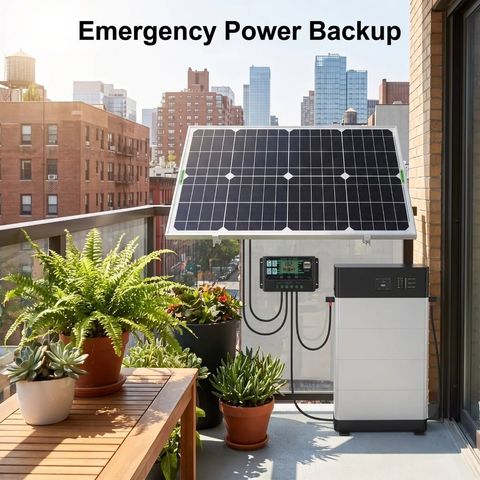
Can a Solar + Battery Setup Keep Your Home Running During Power Cuts?
Updated: November 25, 2026
Read More